E-Scooters and More in New Jersey
Learn more below about electric scooters and other forms of micromobility in New Jersey. Looking for information on e-bikes? Click here.
How does the New Jersey law define e-scooters?
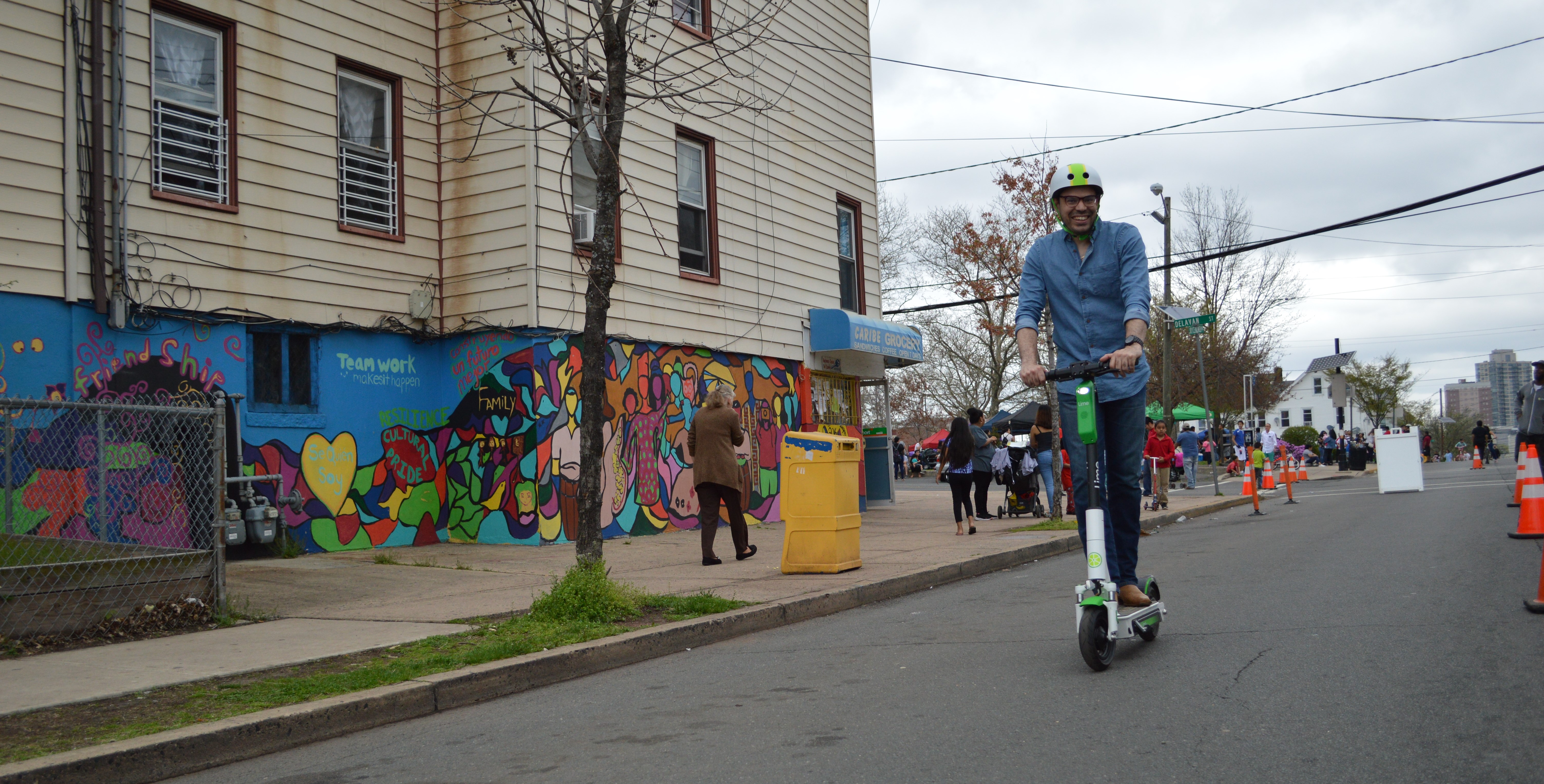
New Jersey law defines a “low-speed electric scooter” as “a scooter with a floorboard that can be stood upon by the operator, with handlebars, and an electric motor that is capable of propelling the device with or without human propulsion at a maximum speed of less than 19 miles per hour.
E-scooters must follow all the laws that apply to bicycles. That means that riders must comply with all the laws that apply to vehicles, such as obeying traffic signals and following the direction of traffic. Like e-bikes, e-scooters may be parked on sidewalks, as long as they do not block pedestrian access. The operation of e-scooters on sidewalks and trails is regulated, and varies, by local municipalities.
Low Speed Electric Scooter:
- Maximum speed of 19 mph
- May be parked on sidewalks but cannot block pedestrians
- Riding on sidewalk up to each municipality
- No license, insurance, or registration required
- Must follow all laws applicable to bicycles
- Helmet required for those under age 17
What is a “personal conveyance”?
New Jersey’s Safe Passing Law, which provides clear rules of the road for all motorists when interacting with vulnerable road users, includes a definition for personal conveyance. According to the law, a “personal conveyance” includes, but is not limited to:
- Low-speed electric bicycle
- Low-speed electric scooter
- Manual wheelchair
- Motorized wheelchair or a similar mobility assisting device used by persons with physical disabilities or by persons whose ambulatory mobility has been impaired by age or illness
- Electric personal assistive mobility device
- Motorized scooter
- Skateboard
- Motorized skateboard
- Roller skates
- Any other device used by a person for transportation
The Safe Passing Law requires motorists to change lanes when passing a person operating a bicycle or personal conveyance. If it is not possible to change lanes, the motorist must provide at least four feet of space when passing. More information about the Safe Passing Law is available here.
How does New Jersey Law define other micromobility vehicles?
What about motorized skateboards, hoverboards, and more? The following table provides an overview of all micromobility vehicle types defined in Title 39:1-1 “Definitions.”
| Vehicle Type | Propulsion Method | Power Source | Maximum Assisted Speed (MPH) | Minimum Age | License | Registration | Insurance | Helmet |
|---|---|---|---|---|---|---|---|---|
| Bicycle | Pedals | No motor | None | None | Not required | Not required | Not required | Under 17 years old |
| Low Speed Electric Bicycle | Pedal-assist | Electric | 20 mph | 15 years old | E-Bike/ Moped License (or Driver License) | Required | Not required | Under 17 years old |
| Motorized Bicycle/Moped | Pedal-assist or throttle | Electric or gas | 28 mph | 15 years old | E-Bike/ Moped License (or Driver License) | Required | Required | All riders (DOT-Approved Motorcycle Helmet) |
| Electric Motorized Bicycle | Pedal-assist or throttle | Electric | Above 28 mph | 17 years old | Motorcycle License (or DL with Motorcycle Endorsement) | Required | Required | All riders (DOT-Approved Motorcycle Helmet) |
| Motorcycle | Throttle | Electric or gas | None | 17 years old | Required | Required | Required | All riders (DOT-Approved Motorcycle Helmet) |
| Low-Speed E-Scooter | Kickstart and throttle | Electric | 19 mph | None | Not required | Not required | Not required | Under 17 years old |
| Motorized Scooter* | Varies | Electric or gas | 15 mph | 12 years old | N/A* | N/A* | N/A | All riders |
| Hoverboards and Segways | Weight shift | Electric | 20 mph | 16 years old | Not required | Not required | Not required | All riders |
| Skateboard, Roller Skates, and Roller Blades | Foot | No motor | N/A | None | Not required | Not required | Not required | Under 17 years old |
| Low-Speed Vehicle | Accelerator pedal | Electric | 25 mph | 18 years old | Driver License | Required | Required | Not required |
| Autocycle | Accelerator pedal | Electric or gas | None | 17 years old | Motorcycle License (or DL with Motorcycle Endorsement) | Required | Required | Drivers and passengers under 17 years old |
*In order to use a motorized scooter on a public street, the rider must have a mobility-related disability and receive permission from the MVC. See the next section for more information.
Are there devices that New Jersey Law prohibits on public roads?
Various devices fall under the category of “motorized scooter.” This designation means a miniature motor vehicle and includes “pocket bikes, super pocket bikes, scooters, mini-scooters, sport scooters, mini choppers, mini motorcycles, motorized skateboards” as well as other vehicles with motors which are not manufactured to comply with Federal Motor Vehicle Safety Standards. Motorized scooters exclude low-speed electric bicycles, motorized bicycles, electric motorized bicycles, low-speed vehicles, low-speed electric scooters, motorized wheelchairs, mobility scooters, or other similar mobility devices used to assist persons with physical disabilities.
New Jersey law prohibits the operation of motorized scooters on public roads, sidewalks, or public lands. These devices may only be operated on private property and only with the consent of the owner. There are exceptions for persons with mobility-related disabilities, but they are restrictive and require a special placard from the Motor Vehicle Commission. Importantly, the “motorized scooter” category does not include traditional motorized wheelchairs, mobility scooters, or other similar mobility devices used to assist persons with physical disabilities, so using these devices does not require permission from the MVC.