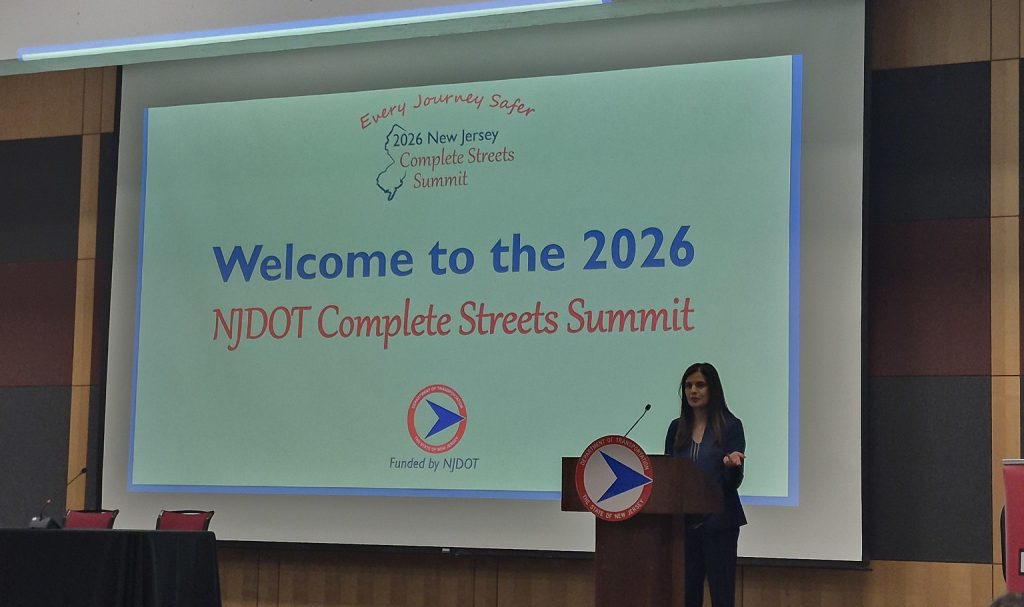
The 2026 NJDOT Complete Streets Summit, held on Tuesday, April 21st, brought together transportation professionals, planners, advocates, public officials, and community leaders from across the state to discuss strategies for creating safer, more accessible, and more connected communities. One of these strategies involves trails and greenways.
As warmer weather encourages more people to walk, bike, and spend time outdoors, conversations about active transportation and trail connectivity become increasingly common across the state. This growing focus is reinforced by New Jersey’s Target Zero Action Plan, adopted in December 2025, which aims to eliminate traffic fatalities and serious injuries by 2040. Among the Plan’s key recommendations is the development of a statewide greenway network, recognizing connected, traffic-separated trails as an important strategy to improve safety and expand transportation options for people of all ages and abilities.
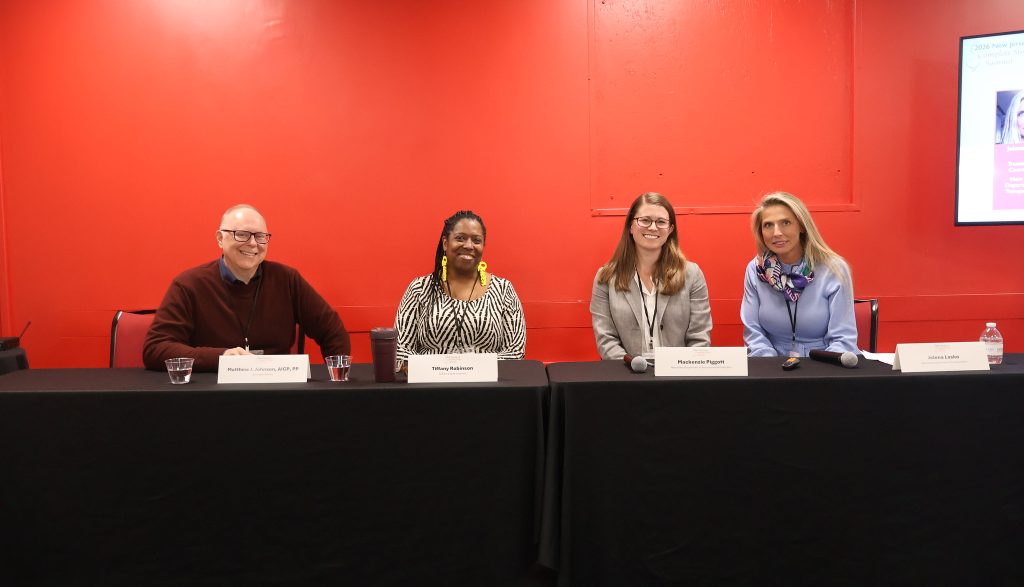
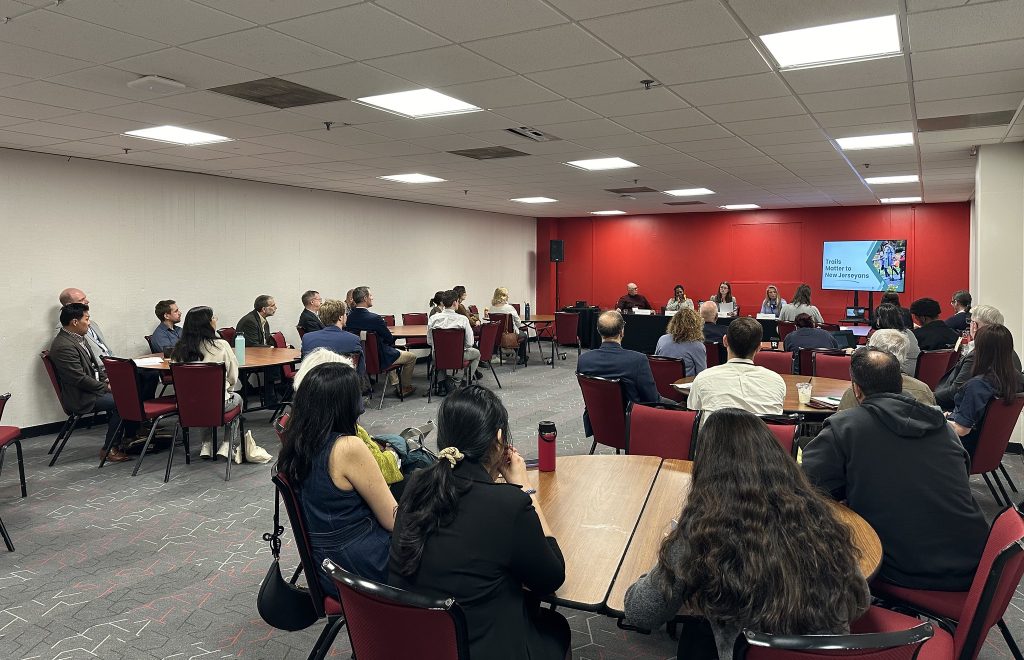
“Envisioning Connected Greenways” was a breakout session at the Complete Streets Summit. A panel of speakers explored how trails and greenways can serve a transportation network and strengthen connections between neighborhoods, schools, downtowns, parks, transit facilities, and regional destinations – all while supporting recreation, sustainability, and economic vitality. Moderated by Jelena Lasko, Transit Village Coordinator at the New Jersey Department of Transportation, the session featured presentations from leaders advancing trail and greenway initiatives throughout the state.
Mackenzie Piggott is the State Trails Coordinator with the Green Acres Program at the New Jersey Department of Environmental Protection. She discussed how connected trail systems can support healthier communities, improve bicycle and pedestrian safety, and strengthen local economies. She outlined key considerations for successful greenway projects:
- early stakeholder engagement;
- coordination across jurisdictions;
- public outreach;
- accessibility;
- planning for maintenance; and
- tapping into the right funding programs.
Tiffany Robinson, Trails and Active Mobility Director for the New Jersey Bike & Walk Coalition, presented the North Jersey Trail Network. She spoke about the importance of advancing connected systems and emphasized that local mobility improvements can have regional impacts. She strongly believes that trails should be viewed not only as recreational amenities, but also as transportation infrastructure that supports daily travel. Robinson also discussed the importance of collaboration, community engagement, and working groups in building long-term support for trail and greenway initiatives.
Matthew J. Johnson, AICP, PP is Deputy Director of the Resource Conservation Department in Burlington County. He presented a case study on the Delaware River Heritage Trail in Burlington County. Johnson explored the history, location, implementation process, and the challenges associated with the project while demonstrating how long-term visioning and coordination can help bring complex trail initiatives to life. He concluded by encouraging attendees to consider how they can help shape the future of active transportation and trail connections within their own communities.
Together, the presentations reinforced how trails and greenways can serve as critical infrastructure that improve safety, expand mobility options, support environmental goals, and strengthen quality of life. As communities across the state continue to advance Complete Streets initiatives, trail and greenway networks will likely remain an important part of conversation surrounding transportation, recreation, and regional connectivity.
Presentation slides from all breakout sessions are available here: 2026 NJDOT Complete Streets Summit Agenda.