Communities can use low-cost materials to test street safety redesigns and see immediate results. New Jersey’s metropolitan planning organizations (MPOs) and transportation management associations (TMAs) are here to help!
Demonstration Projects and Tactical Urbanism
Demonstration projects, also known as tactical urbanism, are often one of the first steps in implementing safety projects. Demonstrations are temporary and small-scale projects that test new and proposed street improvements, offering the public the chance to interact with and offer feedback on these changes before they are made permanent. They allow cities to rapidly test designs and interventions at a reduced cost, engage the community, and build support for more permanent projects. Demonstration projects are usually created using low-cost, quick build materials, and often last between one day and one month.
Common demonstration projects may include bicycle lanes, curb extensions, parklets, crosswalks, asphalt art, and more. For example, in Pennsville, a demonstration project on Riviera Drive tested whether narrower travel lanes, curb extensions, and high-visibility crosswalks could address a local speeding problem and make it safer for people to cross the street.
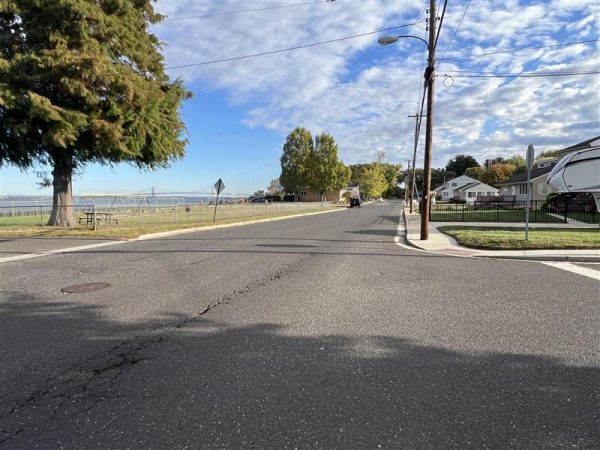
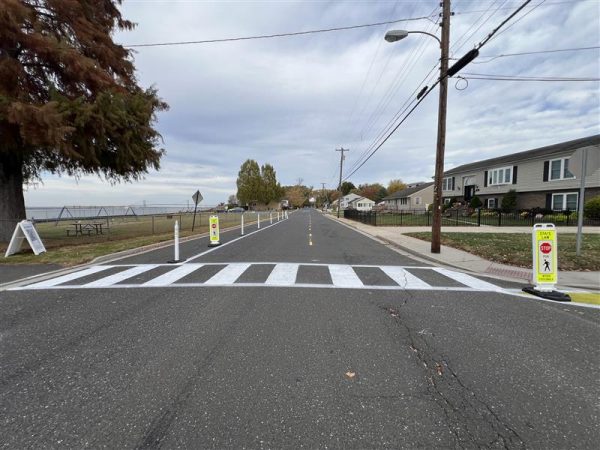
Figure 1: Before and After: Riviera Drive and Dartmouth Road in Pennsville, NJ (Source: Cross County Connection)
Beyond the potential safety benefits, tactical urbanism and demonstration projects support Complete Streets by encouraging community participation in pedestrian, bicycle, and other transportation safety improvements. They also allow towns to reclaim their streets through more space for public art or leisure, having a placemaking effect. These projects enable communities to test solutions, engage residents, and evaluate their effects on safety.
New Federal Guidance
Since 2021, the United States Department of Transportation has revised and updated its guidance on roadway design and safety treatments, reflecting the adoption of the National Roadway Safety Strategy and the Safe System Approach. In 2023, the Federal Highway Administration updated the Manual on Uniform Traffic Control Devices (MUTCD) and provided standards and guidance for both new roadway configurations and the use of temporary and aesthetic materials on roadways.
New guidance lays out criteria for colored pavement for bicycle and transit lanes, supports separated bike lanes and protected intersections, and clarifies that asphalt art is permissible as long as it does not adversely impact official traffic control devices.
Demonstration Libraries
As of March 2026, 185 municipalities in New Jersey have a Complete Streets ordinance or resolution, signifying a desire for safer roadways in the state. Complete Streets is an approach to providing a well-connected, integrated, and safe network of transportation facilities for all roadway users. To aid municipalities, two of New Jersey’s metropolitan planning organizations—North Jersey Transportation Planning Authority (NJTPA) and South Jersey Transportation Planning Organization (SJTPO)—offer Complete Streets Technical Assistance (CSTA).
Additionally, both NJTPA and SJTPO offer Complete Streets Demonstration Libraries to support communities that want to install and evaluate temporary projects. Through these demonstration library programs, municipalities can quickly evaluate Complete Streets solutions for low- or no-cost.
NJTPA’s demonstration library offers materials for projects that may vary in size and duration, including:
- paint
- signs and stencils
- placemaking materials, like benches and picnic tables
- tools and tape
- traffic control devices
- clean up items
NJTPA has supported 23 demonstration projects to date, including eight demonstrations in FY25. These projects included several treatments to slow traffic, with the most common being curb bump-outs, sidewalk extensions, and bicycle lanes. NJTPA also offers design assistance to municipalities upon request.
SJTPO’s demonstration library is a new addition to its Complete Streets programming, supporting the region’s new Complete Streets Technical Assistance program. Paint, signs, movable bollards, planters, cones, delineator posts, and stencils will be available to municipalities and counties.
The Delaware Valley Regional Planning Commission (DVRPC)’s Expo: Experimental Pop-ups program similarly offers technical assistance in the design, implementation, and measure of demonstration projects. In addition to aiding in identifying materials, DVRPC also helps in evaluating demonstration projects through community feedback surveys as well as traffic counts for pedestrians, bicyclists, and motor vehicles.
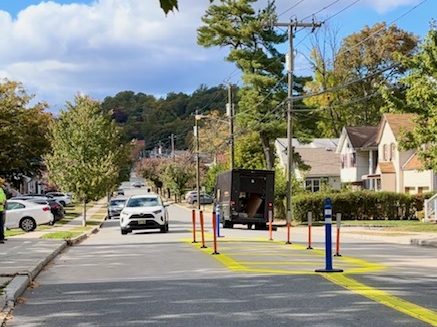
Figure 2: Verona tested a median to slow vehicles on Linden Avenue using paint and flex-posts as part of NJTPA’s Demonstration Library materials (Source: NJDOT Bicycle & Pedestrian Resource Center)
Demonstration Project Steps
There are several steps involved in implementing a successful demonstration project.
- Project location and assessment of need: The first step is to identify a location and assess the location’s need for an intervention. For instance, a 2024 demonstration project in Belleville Township identified four roadways by Belleville High School . The Township collected data on traffic volume, speed, and crash history to determine the risk posed by these roadways.
- Scoping and materials: Following site identification, the next step is to scope the location’s appropriateness for a demonstration project, and to collect both physical materials for the project as well as outreach materials to inform the public. In the Belleville example, NJTPA’s CSTA team provided the Township with the necessary items to create temporary bike lanes and assisted in the development of flyers in both English and Spanish with project details.
- Installation and evaluation: Once the community is informed and the materials are collected and brought to the site, the demonstration project can be installed for the agreed-upon timeframe. Partnerships with other organizations can be leveraged to increase public interaction with the project. Demonstrations may be coordinated with and supported by a community organization, the local transportation management association (TMA), other government entities, or planning/engineering consultants. The Belleville project team partnered with EZ Ride TMA and Borderline Bikes, a local bike shop, to promote the demonstration and provide bicycle safety education to the high schoolers.
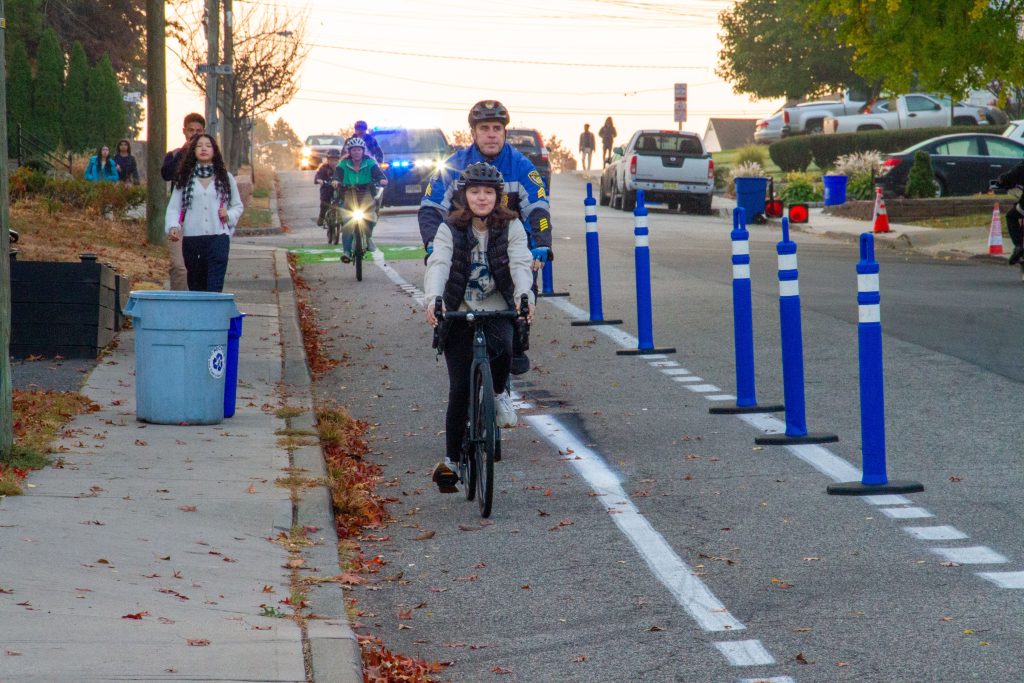
Figure 2: Verona tested a median to slow vehicles on Linden Avenue using paint and flex-posts as part of NJTPA’s Demonstration Library materials (Source: NJDOT Bicycle & Pedestrian Resource Center)
Measuring the Success of Demonstration Projects
The ability to evaluate the effectiveness of a demonstration project is crucial. For NJTPA-supported projects, the MPO asks that municipalities share crash, volume, and speed data to illustrate the initial safety or mobility concerns in a specific area. This information can then be compared with user counts, surveys, and speed studies collected during and after the demonstration project.
Demonstration project evaluation can take many forms, but one of the most important is measuring how the community responds to the project. Online surveys, like the one Belleville released concurrently with its bike lane demonstration project, are one of the most commonly used evaluation tools. It’s important to compare the experiences of residents both before and after the demonstration project. The questionnaire can ask respondents to rate how safe they believe the intervention is and whether it should be made permanent.
Demonstration Projects as Public Outreach
Public outreach is a vital part of all planning processes and public works projects. Demonstration projects should be accompanied by social media posts and/or physical materials like flyers, mailers, and signage, all of which can inform residents of the demonstration and encourage their participation. At the end of a project, agencies may deploy surveys to gather resident feedback and evaluate its impact. With this approach, outreach and engagement support the work completed as well as ongoing efforts.
Demonstration projects can also act as a form of outreach themselves, bringing awareness to street safety issues and engaging community participation even before more permanent projects are implemented. Demonstrations and pilots can be reframed as tools for engagement, allowing residents to experience the proposed changes, spark conversation, and suggest revisions before a permanent design decision is made.