There are over 3,400 miles of railroad tracks in New Jersey, and almost 44% of schools in the state are located within a half-mile of an active freight or passenger rail. Given that nationally, 34% of railroad incidents over the past ten years have occurred at highway-rail grade crossings, it is important to improve safety at existing crossings and to raise awareness on best practices for using and designing them. Common issues at railroad crossings include cyclists and pedestrians in wheelchairs catching their wheels in flangeway gaps, limited visibility, illegal crossing of tracks, and a lack of crossing gates for vulnerable road users. Trespass-related events, including suicides, are also a critical concern though complete data on these incidents is not always available.
There are several crucial things to remember when crossing railroad tracks.
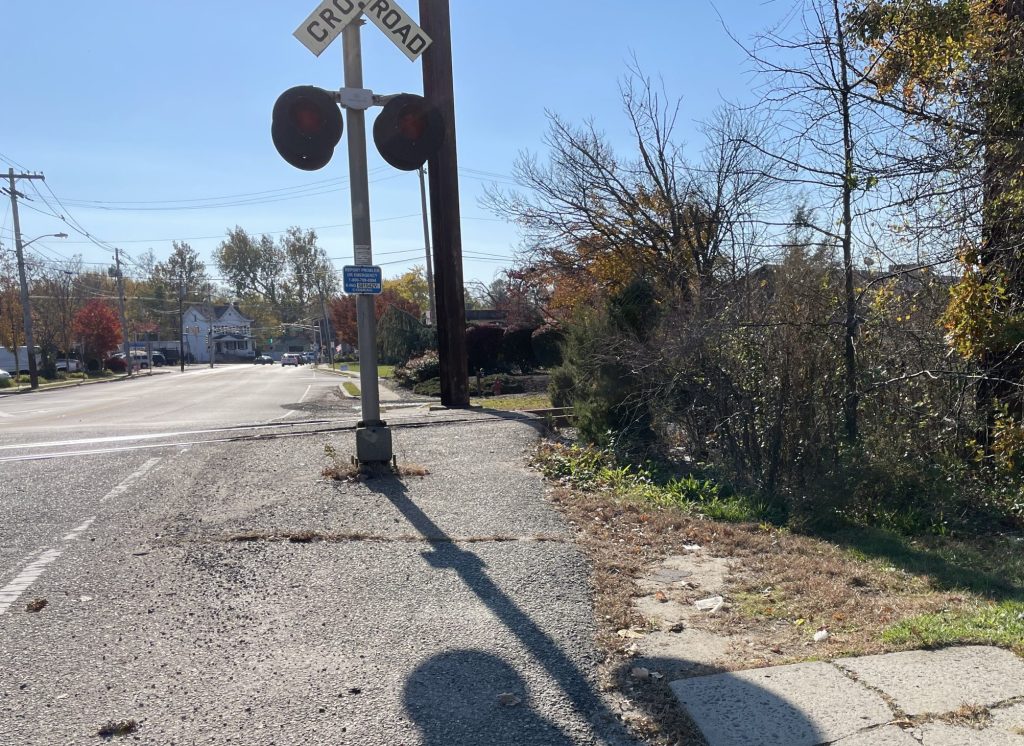
- Trains are significantly wider than tracks, overhanging by at least three feet on each side, so it’s important to keep a safe distance. It is recommended to stay at least 25 feet away from the tracks.
- Trains can travel from either direction, at any time of day or night. You should always expect a train.
- Even if one train passes, there may be a second one approaching. At signalized railway crossings, do not cross before the signals have stopped flashing or the arms have gone up. At non-signalized crossings, look twice in both directions, and always expect a train.
- Modern trains are quiet and fast. It takes about a mile for most freight trains to stop. Do not go on tracks when a train is coming, even if it seems farther away or slower than it is.
- Active rail lines are private property, and walking on the tracks is illegal. This is trespassing and it is the leading cause of rail-related deaths in the US. All road users, no matter how they travel, should cross railways only at designated crossing locations.
Railway Safety Countermeasures for Vulnerable Road Users
Countermeasures that address highway-rail grade crossings can be either passive or active in nature. Passive devices do not indicate the approach or presence of a train; these countermeasures instead identify and direct road users’ attention to the crossing location. Passive installations that can improve safety at railway crossings include sidewalks, fencing, pavement markings, swing gates, detectable warnings, and signage. Active devices alert road users to present or oncoming trains and include flashing light signal assemblies with audible warning devices and pedestrian gates.
Redesigning or reconfiguring highway-rail grade crossings can also significantly increase safety at high-risk locations. Strategies can include grade separation, right-angle crossing realignment, or crossing elimination. Grade separation provides the greatest safety and operational benefits for both road users and rail traffic; however, the expense is also highest due to capital costs, land acquisition, and environmental impacts. While realignment can increase visibility for road users and reduce the risk of wheel bindings for wheelchairs and micromobility devices at a moderate cost, it will not eliminate conflicts between trains and road users.
In 2023, the New Jersey Department of Transportation completed a study to identify locations of grade crossings eligible for elimination based on data such as crash history, daily transit usage, emergency response systems, and existing infrastructure. While crossing elimination can remove some of the risk of train-road user crashes, it is important to consider unintended consequences. The elimination of grade crossings may impact residents without cars, as well as increase emergency response times. In locations being considered for grade crossing elimination, public participation should be a central focus of the planning process to ensure that the closure will not hinder accessibility and mobility for people traveling on foot, bike or micromobility device and encourage risky behavior.
Increased education can promote safety. New Jersey Operation Lifesaver, which is part of the national Operation Lifesaver organization, promotes rail safety through public awareness campaigns and specialized programs for K-12 students, emergency responders, law enforcement officers, firefighters, and others. Public education can be enhanced through targeted outreach, particularly to people in neighborhoods near rail lines, school populations, pedestrians with disabilities, and other vulnerable road users. Education should also incorporate trespass prevention, addressing the risks of trespassing at commuter stations, and the impacts a trespassing fatality can have on transit employees as well as victims’ families.
Bicycle and Wheelchair Tips When Crossing Tracks
Bicyclists and wheelchair users face the risk of their wheels getting stuck in flangeway gaps. These road users should check for traffic and slow down when approaching railroad tracks. To avoid getting wheels caught in these gaps, bicyclists and wheelchair users should cross at a 90-degree angle even when tracks are angled, and should wait until both tires are over the tracks before turning. It may be useful for wheelchair users to get assistance or plan an alternate route that avoids railway crossings. If possible, bicyclists should dismount and walk their bikes across the tracks, especially if the tracks are wet. Cyclists, pedestrians and micromobility users should also turn off their music and remove earphones at rail crossings so they can hear any approaching trains.
There are also design elements that can prevent bicycle and wheelchair wheels from getting stuck. Compressible rubber flangeway fillers provide a level surface for bicyclists and pedestrians to cross but compress under the weight of a train. At angled tracks, bike lanes can be configured to guide bicyclists across tracks at a 90-degree angle. Warning signs that alert cyclists and wheelchair users to possible hazards can also encourage safe railway crossing behavior.
Keeping Safety on Track
It takes a combination of thoughtful design, targeted safety countermeasures, and ongoing public education to greatly reduce risks for all users at railroad crossings. It is crucial to weigh the costs and benefits of different types of railroad crossing improvement, including passive and active warning systems, crossing reconfigurations, grade separations, and crossing eliminations.
Additionally, ensuring that cyclists, pedestrians, wheelchair users, and micromobility travelers know how to navigate tracks safely is essential, especially in communities where rail lines are part of daily life. By pairing safer crossings with awareness efforts and community-informed planning, New Jersey can continue to enhance accessibility while reducing preventable crashes and trespass incidents. A coordinated approach helps ensure that every road user can travel with confidence and safety around active rail lines.